OpenAI cuts GPT-5.6 Luna API prices by 80%, Terra by 20%
The efficiency gains OpenAI credits partly to its own Sol model now reach developers as sharply lower token prices, effective July 30, 2026.
By Himanshu Bhatt· 4 min read· August 5, 2026
- GPT-5.6 Luna now costs 80% less: $0.20 / $1.20 per 1M input/output tokens.
- GPT-5.6 Terra costs 20% less: $2 / $12 per 1M tokens.
- GPT-5.6 Sol keeps its price but gains a new Fast mode (up to 2.5× faster).
- OpenAI attributes the cuts to efficiency gains, including −20% serving cost from kernel optimizations.
- Lower Luna/Terra rates also apply to Codex and ChatGPT Work usage.
On this page(show)(close)
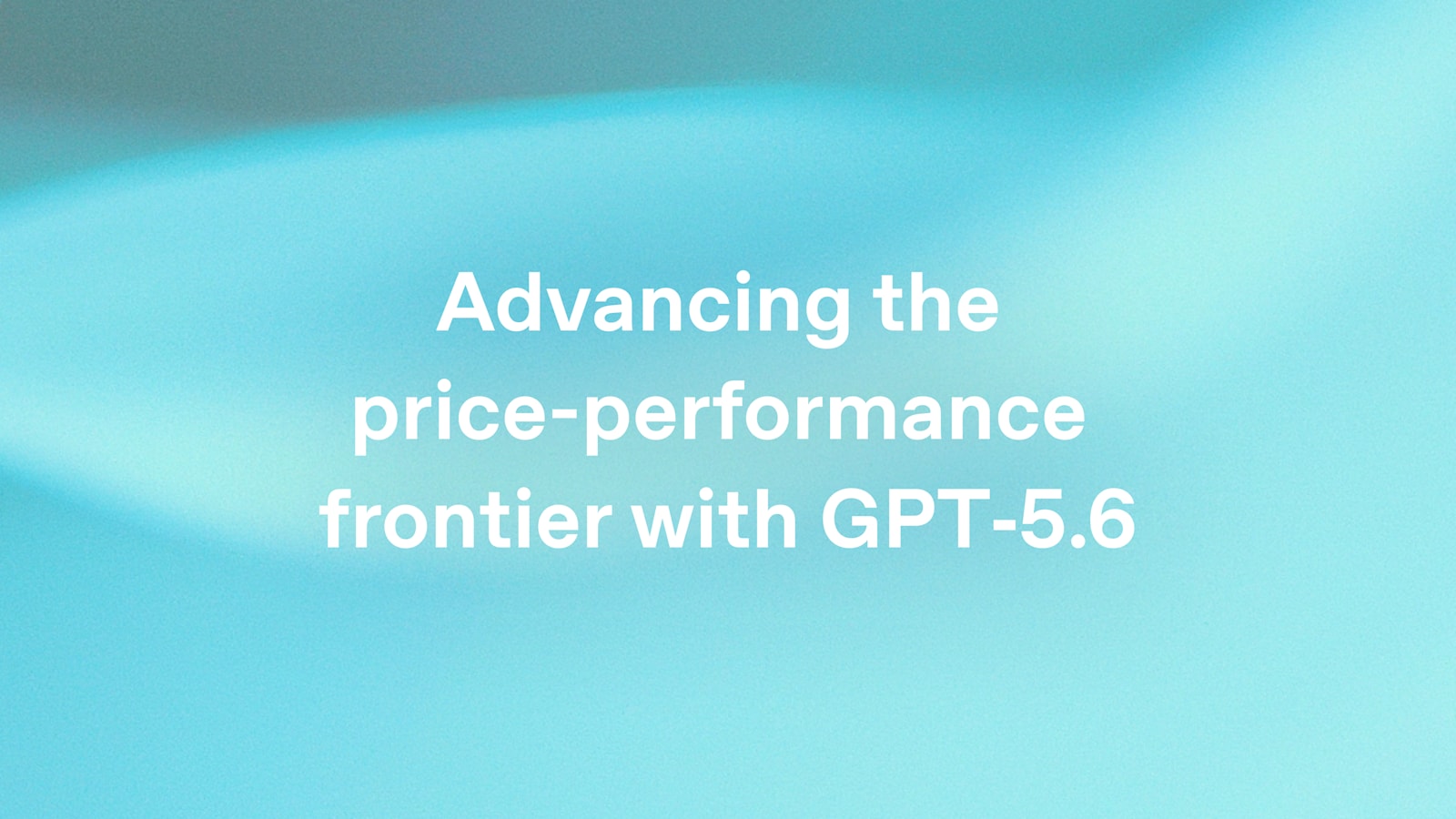
OpenAI has cut the price of its GPT-5.6 Luna model by 80% and GPT-5.6 Terra by 20%, effective July 30, 2026, passing on efficiency gains the company says came in part from its own Sol model optimizing OpenAI's serving infrastructure. Luna, OpenAI's fastest and cheapest model, now costs $0.20 per million input tokens — a change that makes high-volume, agentic workloads dramatically cheaper to run at scale.
What OpenAI changed
The reductions apply across OpenAI's three GPT-5.6 tiers, which the company positions by workload rather than raw capability. Luna is the fastest and most affordable option, built for high-volume tasks; Terra is the balanced mid-tier for everyday work; and Sol is the frontier model for the most demanding jobs. Only Luna and Terra received price cuts — Sol's per-token price is unchanged, but it gains a new Fast mode in the API.
- GPT-5.6 Luna: $0.20 per 1M input tokens, $1.20 per 1M output tokens (down 80%)
- GPT-5.6 Terra: $2 per 1M input tokens, $12 per 1M output tokens (down 20%)
- GPT-5.6 Sol: per-token price unchanged; adds Fast mode (up to 2.5× faster than Standard, at twice the price, with no change in intelligence)
- Luna's prior pricing was $1.00 / $6.00 per 1M input/output tokens [VERIFY: CNBC/VentureBeat "before" figures]
Why the prices dropped: efficiency, not a loss leader
OpenAI framed the cuts as a pass-through of real efficiency gains rather than a subsidy. The company said GPT-5.6 Sol, working within a human-led process, autonomously rewrote and optimized production kernels and ran hundreds of experiments to improve token generation. According to OpenAI, that kernel work reduced the end-to-end cost of serving the model by 20%, while the experiments improved token-generation efficiency by more than 15%. The savings, the company said, come from improving the models, the inference systems that run them, and the agentic harness that connects them to tools.
GPT-5.6 Luna is the closest we've come to intelligence too cheap to meter. I've never seen a model this affordable be this powerful — it's unlocking use cases for Replit we didn't expect to build for a long time.
What cheaper Luna means for developers
For teams building AI products, the cut reshapes what is economical to run continuously. OpenAI says Luna delivers performance comparable to models that were frontier-class a year ago at roughly six cents on the dollar per task, at nearly nine times the speed; on the Agents' Last Exam benchmark, the company says Luna outperforms Fable 5 at an estimated cost per task nearly 99% lower. In practice, that favors hybrid workflows — using Sol to resolve uncertainty and set the plan, then Luna to implement well-specified changes, write and run tests, and evaluate the results.
The bigger picture: an AI price war
The move lands amid intensifying cost competition among AI providers. Coverage from CNBC and VentureBeat framed the cut as a response to increasingly cost-sensitive enterprise buyers and pressure from rival model makers. By lowering the floor on high-volume inference, OpenAI makes it cheaper for developers to run always-on agents and batch workloads — while raising the competitive stakes for cheaper open and proprietary alternatives.
The bottom line
The GPT-5.6 price cut is less a promotional discount than a signal of where AI economics are heading: as models get more efficient — increasingly with help from the models themselves — those savings are landing directly on developers' bills. For high-volume, agentic workloads, an 80% cut to Luna meaningfully changes the math on what is worth automating.
Sources
- OpenAI — Advancing the price-performance frontier with GPT-5.6 (July 30, 2026)
- OpenAI API — GPT-5.6 Luna model and pricing documentation
- CNBC — OpenAI cuts prices for two of its GPT-5.6 AI models (July 30, 2026) (click-test first)
- VentureBeat — OpenAI cuts GPT-5.6 Luna prices by 80% (click-test first)
Frequently asked questions
- How much does GPT-5.6 Luna cost now?
- As of July 30, 2026, Luna costs $0.20 per million input tokens and $1.20 per million output tokens — an 80% reduction.
- Did GPT-5.6 Sol get cheaper too?
- No. Sol's per-token price is unchanged. Instead, Sol gained a new Fast mode that runs up to 2.5× faster than Standard processing at twice the price, with no change in intelligence.
- Why did OpenAI cut prices?
- OpenAI attributes the cuts to efficiency gains — including production-kernel optimizations it says reduced serving costs by 20% and improvements that raised token-generation efficiency by more than 15% — which it is passing on to customers.
- Do developers need to change any code to get the lower prices?
- No. The change is to pricing, not the API, so existing integrations are billed at the new Luna and Terra rates automatically. OpenAI also applied the lower rates to how usage is counted in Codex and ChatGPT Work.
This article was produced with AI assistance for drafting/research. All facts have been verified and the final content has been reviewed and approved by a human editor.
Related Stories & Next Reads


Don't miss the next deep-dive
Weekly breakdowns of the tools students and builders actually use.
No spam·Unsubscribe any time·Privacy-first