Researchers audited 281 free Android VPNs: most track you, dozens leak your data
Academic researchers used a tool called MVPNalyzer to audit 281 free Android VPN apps and found 61 sending data in plaintext, 29 leaking traffic outside the tunnel, and 246 apps (over 80%) contacting ad/tracking servers. Here's what it means for anyone relying on a free VPN.
By Himanshu Bhatt· 5 min read· August 24, 2026
- A study of 281 free Android VPNs found most had at least one security or privacy problem.
- apps sent data in plaintext; 29 leaked traffic (including DNS) outside the "protected" tunnel.
- apps (over 80%) contacted 3,714 unique advertising and tracking URLs — the opposite of privacy.
- Some apps used broken encryption (Blowfish, Triple DES) or none at all.
- The lesson isn't "VPNs are useless" — it's that a free, unvetted VPN can be worse than none.
On this page(show)(close)
A team of academic security researchers has audited 281 free Android VPN apps from the Google Play Store and found that the majority put users at risk rather than protecting them. Using a purpose-built analysis framework called MVPNalyzer, the researchers documented apps that transmitted data in plaintext, leaked traffic outside the encrypted tunnel, shipped weak or absent encryption, and — in the overwhelming majority of cases — quietly contacted advertising and tracking servers. The findings, presented at the NDSS security conference, are a pointed reminder that a "free VPN" is often anything but private.
What the researchers found
MVPNalyzer inspects a VPN app's behavior across multiple network layers — what it encrypts, what it leaks, how it authenticates, and who it talks to. Across the 281 apps, the picture was consistent: security guarantees that these apps advertise frequently did not hold up in testing. The single most alarming category involved five apps that transmitted their VPN configuration file unencrypted. Because that file specifies which server the app connects to, an attacker positioned on the network could tamper with it and redirect a user's supposedly private traffic — an attack the researchers describe as tunnel hijacking.
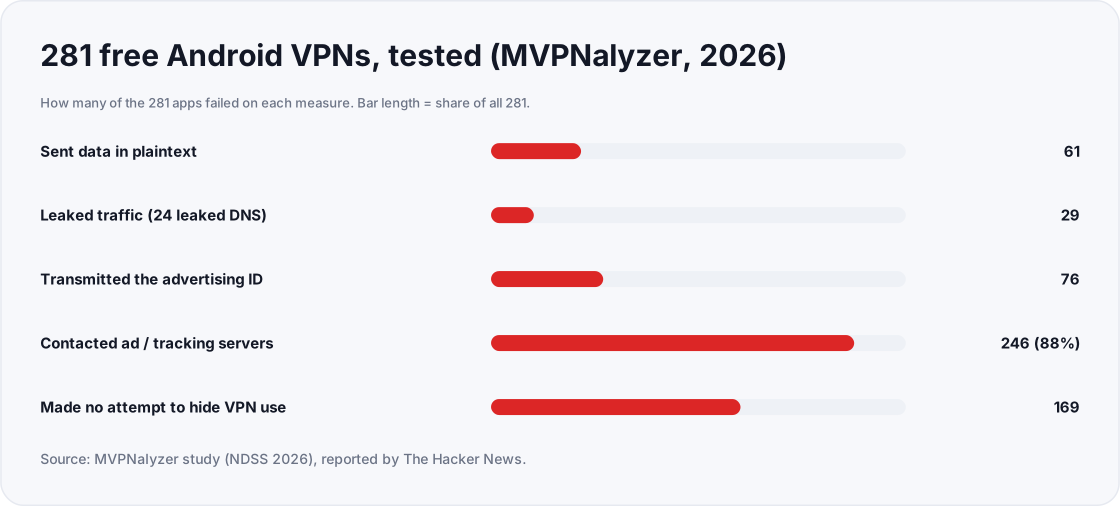
- Plaintext data: 61 apps transmitted user data without encryption.
- Traffic leaks: 29 apps leaked traffic outside the VPN tunnel — 24 leaking DNS requests, between them installed 360 million times; 6 leaking full browsing traffic across apps with 54 million installs; and 4 running "tunnels" that weren't encrypted at all. The paper names every one of them in its own table.
- Tracking: 76 apps sent the device Advertising ID, 38 sent the device's IP address, and one transmitted precise GPS coordinates. In total, 246 apps — over 80% of those studied — contacted 3,714 unique advertising and tracking URLs.
- Weak crypto: of 108 apps carrying an OpenVPN configuration file, exactly one followed every security best practice the researchers checked. 88.8% relied on a single authentication method rather than combining a password and a certificate, and 18.5% used weak encryption — including apps defaulting to Blowfish (CVE-2016-6329) and one explicitly selecting Triple DES (CVE-2016-2183). Eight apps set the cipher to "none."
- No obfuscation: 169 apps made no effort to disguise VPN traffic, making them trivial to detect and block.
Why "free" is the common thread
Running a VPN service costs money — servers, bandwidth, and engineering. When an app gives that away for free, the revenue usually comes from somewhere else, and the study's tracking findings suggest where: the apps that contacted advertising and tracking infrastructure were monetizing the very browsing activity a VPN is supposed to conceal. That doesn't make every free VPN malicious, but it does mean a free, unvetted app is precisely the wrong tool for privacy — you may be handing your traffic to more parties, not fewer.
What you should do about it
- Audit what you have installed. If you're running a free VPN you can't name the company behind, assume it offers little real protection.
- Know what a VPN does and doesn't do. It encrypts traffic and hides your IP — it is not antivirus and won't stop tracking cookies or malware. See our explainer on what a VPN does not protect you from.
- Prefer independently audited, paid or reputable-free providers with a published, tested no-logs policy over an anonymous free app. Our guide to choosing a safe VPN covers what to look for.
- Check for DNS leaks after connecting — a VPN that leaks DNS is broadcasting the sites you visit. See our explainer on what a DNS leak is.
The bottom line
The takeaway from MVPNalyzer isn't that VPNs don't work — it's that the label is carrying a lot of unearned trust. The researchers say they disclosed the most exploitable findings to the providers involved, and they have said they intend to release the tool publicly, which would let users and journalists spot-check apps for themselves; the stated timeframe was mid-August 2026, and we could not confirm the release had happened at the time of writing. Until it does, the safest assumption about a free, unknown VPN is that it is not protecting you the way it says it is. If privacy is the goal, choose the provider deliberately rather than by whichever app ranks first in a store search.
Frequently asked questions
- Are all free VPNs unsafe?
- No — but the study found that most of the 281 free Android apps it tested had at least one meaningful security or privacy problem, and the overwhelming majority contacted trackers. A free VPN from a reputable, independently audited provider can be fine; an anonymous free app is a gamble.
- What is a DNS leak, and why does it matter here?
- A DNS leak means your device's requests to look up website addresses travel outside the encrypted tunnel, so your network or ISP can still see which sites you visit — defeating a core purpose of the VPN. The study found 24 apps leaking DNS.
- What is "tunnel hijacking"?
- Five apps sent their configuration file — which names the server the app connects to — without encryption. An attacker on the same network could alter it and reroute the user's traffic, breaking the VPN's core promise.
- Is a paid VPN automatically safe?
- Not automatically, but paying removes the incentive to monetize your data through ads and trackers, and the best providers publish independent audits of their no-logs claims. Choose based on audits and reputation, not price alone.
Sources
Where to go next
This article was produced with AI assistance for drafting. All facts were verified against the cited sources and the final content was reviewed and approved by a human editor.
Related Stories & Next Reads



Don't miss the next deep-dive
Weekly breakdowns of the tools students and builders actually use.
No spam·Unsubscribe any time·Privacy-first